
Schools
Community in mourning after student dies in Sunday morning accident, district says
By Jordan Lee
Advertisement · Why this ad?
Tanya has a background in sociology and journalism, having earned her degree from Texas A&M University. With five years of experience writing for various local outlets and non-profits, she focuses on important community issues such as public health and social justice.
More from Tanya →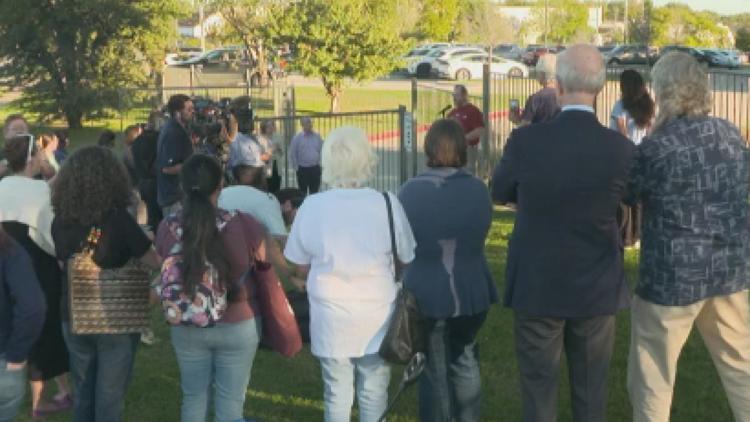
As the sun began to set over Fort Worth, casting a golden hue across the schoolyard, a group of parents gathered, their faces a mixture of concern and determination. They stood united, clutching signs that read, “Save Our Schools” and “Pause the Decisions.” These parents are not just voices in the crowd; they are the heartbeat of their community, fighting for the future of their children’s education. The Fort Worth Independent School District (FWISD) is poised for significant changes, and these parents are calling on the state-appointed board of managers to pause major decisions that could impact their schools.
Recently, the FWISD has been under the scrutiny of a state-appointed board, which has been tasked with overseeing the district amid ongoing challenges. As the district navigates a potential shift in state leadership, parents are asking the board to delay decisions on crucial matters such as campus sales and closures. The board's decisions could have lasting effects on the educational landscape in Fort Worth, and parents fear that hasty choices may lead to detrimental outcomes for their children’s futures.
“We want to ensure that our voices are heard in this process,” said Maria Gonzalez, a parent and active member of the advocacy group. “These schools are not just buildings; they are a part of our community, our families. We need time to understand what these changes mean for us.” The call for a pause comes as the board prepares to make decisions that could reshape the district's structure, potentially affecting hundreds of students and their families.
The parents’ concerns are not unfounded. With the backdrop of a changing educational landscape, they worry that the swift decisions could lead to the closure of schools that serve as vital community hubs. In a district where many families rely on local schools for education and social services, the stakes could not be higher. The group is advocating for transparency and community involvement in the decision-making process, emphasizing that parents should have a say in the education of their children.
The response from the Fort Worth community has been overwhelmingly supportive of the parents’ initiative. Local residents have rallied around the cause, attending board meetings and voicing their concerns. Many share personal stories of how their schools have positively impacted their lives and the lives of their children. “My daughter learned to read in that school,” said James Mitchell, another concerned parent. “Closing it would not just take away her education; it would take away a piece of our family’s history.”
These heartfelt testimonies resonate deeply within the community. The stories shared by parents reflect a broader sentiment that schools are more than just places of learning; they are the fabric of the community. Many families have established roots in their neighborhoods, and their schools are central to their identities. The emotional weight of potentially losing these institutions is palpable.
Moreover, the parents are not alone in their fight. Local organizations and community leaders have stepped up to support their cause, emphasizing the importance of preserving educational opportunities for all children. “We are committed to ensuring that every child has access to a quality education,” said Dr. Lisa Reynolds, a local educator and advocate for educational equity. “These schools are critical to our community’s future.”
The backdrop of this situation is complex. The FWISD has faced numerous challenges in recent years, including budget constraints and declining enrollment. The state-appointed board was established as a response to these issues, with the intention of bringing about necessary reforms. However, the process has been met with skepticism from parents and community members who feel sidelined in the discussions that affect their children’s education.
As the board considers the future of the district, the parents’ call for a pause highlights the need for a more inclusive approach to decision-making. “We need to work together to find solutions that benefit everyone,” said Gonzalez. “We want to collaborate, not just be told what’s going to happen.” This sentiment echoes throughout the community, as residents seek to reclaim their voices in the educational process.
In light of these challenges, the parents are advocating for a comprehensive review of the district's plans, urging the board to consider the long-term implications of their decisions. They believe that a thoughtful approach, grounded in community input, will lead to better outcomes for students and families alike.
The future of the Fort Worth ISD hangs in the balance, and the parents’ plea for a pause is just the beginning of a larger conversation about the direction of education in their community. As the board of managers prepares to meet, the parents are hopeful that their voices will be heard and that their concerns will lead to meaningful dialogue.
In the coming weeks, the advocacy group plans to organize community forums to discuss the issues at hand and gather more input from families. They aim to present a united front to the board, demonstrating the strength of their commitment to preserving their schools. “We are not going to back down,” said Mitchell. “Our children’s future is worth fighting for.”
As the landscape of education continues to evolve, the parents of Fort Worth ISD are determined to play an active role in shaping the future of their schools. Their efforts serve as a powerful reminder of the importance of community engagement in the educational process, and their fight for a pause is a testament to their love for their children and their commitment to their community.
In a world where decisions often seem to be made far removed from the families they impact, the parents of Fort Worth are standing up to ensure that their voices are not just heard, but valued. As they move forward, they carry with them the hopes and dreams of countless families, united in their mission to protect the educational opportunities for the next generation.
The implications of the parents' plea extend beyond the immediate concerns of school closures and campus sales. In a city like Fort Worth, where educational resources are often tied to socio-economic status, the potential loss of schools could exacerbate existing inequalities. Many of the schools at risk serve low-income families who rely on them not only for education but also for essential services such as meals, counseling, and after-school programs.
“For many families, these schools are a lifeline,” noted community activist Sarah Thompson. “If we lose them, we risk losing a support system that many of our children depend on.” This perspective highlights the need for a more nuanced understanding of the role schools play in their communities, particularly in areas where access to resources is limited.
Additionally, the potential changes in FWISD's governance could set a precedent for other districts facing similar challenges. As state-appointed boards become more common in Texas, the decisions made in Fort Worth could influence how other communities approach educational reform and stakeholder engagement. The outcome of this situation may very well shape the future of educational governance across the state.
The parents of Fort Worth ISD are not just advocating for their schools; they are championing a vision of education that prioritizes community involvement and equitable access to resources. Their collective action serves as a reminder that the fight for quality education is ongoing and that every voice matters in this critical conversation. As they continue to mobilize and engage their fellow community members, the hope is that their efforts will lead to a more inclusive and responsive educational system that truly serves the needs of all students.
By Jordan Lee

By Carmen Estrada

By Nina White

By Ryan Brooks